
|
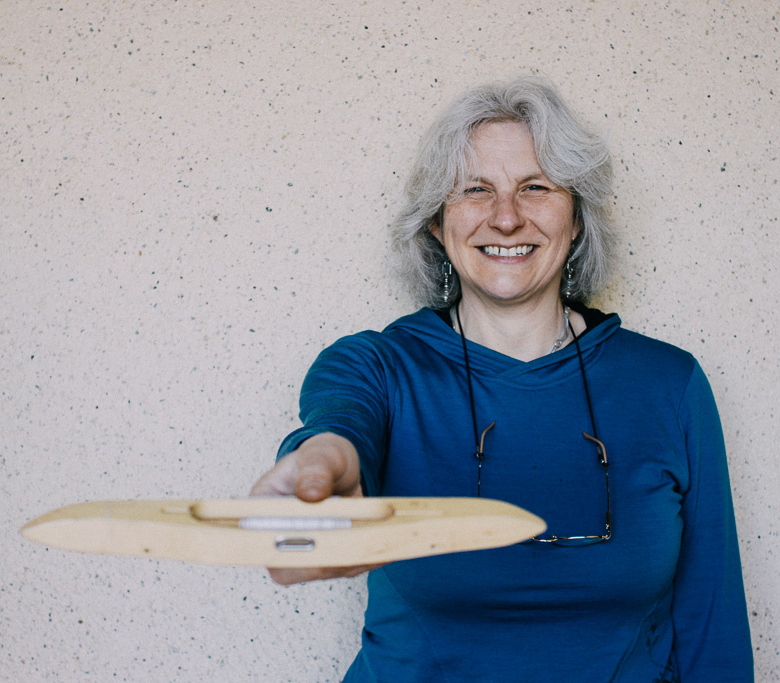
Hello, and welcome to this beautiful part of England where I create woven and dyed textile art. I call myself an Artist Weaver because I use all sorts of inspiration from nature, computers, books, photos to develop unique works of art woven on dobby and jacquard looms. I make framed or mounted pictures, banners, wall-hangings of various sizes, and am developing art kimonos. Do visit the Gallery page to see examples of my work. I'm currently working on several projects, from medical textile research to textural fabrics to be incorporated into satellite images, and also presenting lectures and writing articles on weaving.
APRIL NEWS UPDATE - BLOGSPOT ... This month has been much quieter as I won't be going back to Oman for a while. Sadly we couldn't get contracts sorted for the teacher training before my available time ran out. Still, there are plenty of other things to keep me occupied. I am currently writing my Complex Weavers lectures, working on a medical textile research project, developing some new artworks on my sample jacquard looms, devising some more of my own textural samples and doing more teaching and lecturing. Plus the garden needs some attention after the winter! However, we did take time for a family holiday to Tunisia, and here are a couple of photos of the weavers I saw there. We also went on a Sahara trip and I spent some of the camel ride looking as closely as I dared (without falling off!) at the rugs and braids of the camel trappings. The camel riding was awesome! I loved it, despite my camel being really pushy and bad tempered, but my son's camel was an absolute sweety - definitely the princess of the group! Loooonnng eyelashes, loved having her eye ridges rubbed, very docile.
   Knotted pile rug weaver (Sousse) Closeup (she keeps the design in her head) Loom weaver weaving a bridal silk with 4 shafts (Tunis)
I also have to notify guild programme secretaries that I have regretably had to put my travel costs for each lecture or workshop up to 35p a mile. I've kept them at the same cost for the last 3 years, but with the huge increases in petrol prices, I have no choice other than to reflect the increases. The lectures and workshops are still, of course, the same brilliant value for money !! (If you don't want to take my word for it, take a look at the wonderful comments I've had from satisfied customers!) The new prices will be for any new bookings.
MARCH NEWS - I'm keeping this on my homepage for another month, as I know that there is quite a lot of interest in this project. I've just got back to the UK after a 2 month stint in Oman, assembling all the looms for a weaving workshop designed for 60 students. We have assembled Louet Kombos, Harris table looms (4, 8 and 16shaft), 6 Louet Spring 90s, 2 Spring 110s and 2 32shaft Megado dobby looms, one mechanical and one computer-assisted. We've also assembled spinning wheels (Ashford travellers and traditional), rigid heddle looms, inkle looms, tapestry looms, skeiners, and marudais. We've also got 8 Leclerc Mira floor looms. As you can tell, it's quite a setup!

 The workshop looks great and it will be good to see it occupied by students in the autumn. As I've posted before, I'm being employed by the Public Authority for Craft Industries in Oman to set up a Weaving Workshop for 60 weaving students. This is a really exciting venture which I hope will benefit many Omani craftspeople and lead to a thriving textile programme. This first part involved setting up all the looms which came from Canada, the Netherlands, and the UK, along with a library of books, a whole store of yarns, dyes and fibres, and spinning wheels. Also included will be felting and knitting.
The setting is looking good now, with decorative paving being installed. It will be a wonderful place to study. We also now have 25 students lined up for starting in September. The facilities include a dyeing room, a weave design room with 5 computers, a huge weaving workshop, a library, a spinning room, a lecture room and the directors office and a staffroom. Oh, and yes, the yarn store! We have just had a load of 60/2 Indian cotton which was left over from a weaving factory which we are able to utilise and also some rug yarn in red and black. In fact, over 4 tons of both sorts, so I think that will keep the weaving workshop going for years!
Just quickly wanted to tell you of a couple of great experiences I've just had - one a trek into the mountains in a 4x4 to meet some weavers, driving up the wadi beds (something you don't do if there are any clouds in the sky). It was amazing! The mountains are spectacular and the driving hair-raising! The weavers are right at the end of a very long track and during the winter, they don't weave, so I couldn't take any photos for you. In the summer, when the sheep are shorn, the spinning is done, and then the weaving. The colours are black, white, and tan with reds created with madder. The weaving is warp repp, with standards differing, and patterns simple but very varied. I bought a couple of pieces directly from the weavers, although be warned if you go there - the children are formidable negotiators! I also met a Bedu weaver. We were taken sand-surfing (also known as sand-skiing) in a 4x4 in the Wahhibya sands (that's an experience too!!) and our desert guide took us to his encampment where we were given coffee, dates and helwa, and saw his wife's weaving. They are amazing and created on 4 pieces of pipe for a weaving frame with two sticks perched on top of 2 oil cans! In the mountains, it is the men who weave, in the desert, the women.
 Her loom The Bedu weaver is seated to the left of the group, dressed in black Some of her narrow loom weaving. Her hangings and mats are on the tent walls in the middle image. These are also created on similar 'looms'.
Muscat Festival, from 21st Jan - 15 Feb, was indeed an interesting experience. The Festival took place over 3 different sites this year. In Qurum, the international global village was situated which featured artisans from Iran, Indonesia, the Philippines, China, Yemen, Morocco, Turkey, Egypt and Syria. I esepcially enjoyed chatting to Poppy, a wonderful double ikat weaver from West Timor and was able to buy one of her pieces, a double ikat indigo piece. Gorgeous!
 Poppy and the ikat she wove for a royal commission This gorgeous indigo ikat I bought!!
Of interest to weavers, there was a Zilloo weaver from Iran, one of only about 30 left. The loom was very straight forward - a vertical tapestry type loom made out of metal pipes and poles, with a 'simple' system like those used on early jacquard looms before cards were used for patterns.

 Also at Muscat Festival was the Omani Experience - showing how the different peoples live and work - such as using a cow and and donkey to raise water from deep wells to water the falaj system of crop irrigation, using a cow to turn cogs to crush sugar cane, showing the Bedouin way of life (drinking lots of coffee, using camels) and lots of different crafts, including the last remaining indigo dyer in Bahla, tapestry weaving, pit loom weaving (4 shaft direct tie-up, ground loom weaving, braid weaving with fringes, and braid weaving to join two widths of wizar (the men's undergarment) together.
These photos show a pitloom weaver in the town of Barka, about 45km northeast up the coast from Muscat. The warp is stretched out across the courtyard, being tensioned from along its length by a rope which comes down to the weaver so it can be released for winding on, and the remaining warp is just wound into a ball.


The loom is a 4 shaft, direct tie-up counterbalance. The batten is made from sidr, a very hard wood which wears to a beautiful sheen! As you can see, the weaver is quite elderly, and this is a common problem in Oman. The remaining weaving craftsmen are generally on the older side, and there is great concern that the youngsters don't want to be seen doing this kind of work, so that's one of the reasons that the training centre has been set up, so that the youngsters can see it as a potential and valid career.
The fringe braider here also has a 4 shaft loom, direct tie-up. His warp is just crudely bundled on to the back beam and not spread at all. It makes me smile to think how we westerners fret about our warping and here are these guys, with crudely prepared warps, creating perfectly good braids!!

For a batten, the weaver uses a sword which he rests on the rail running to the left of the picture, but to the right of the weaver. Note the extra cord along the right of the picture, running from the front to back of the loom. This is so the fringing is kept at a consistent length.
My final exhibition weaver was weaving the braid that is at the bottom of the wizar, the undergarment worn by Omani men under their dishdashas. It is white with tribes identified through the stripes down one side. The warp threads of the wizar are used as the weft threads for the braid, as you will see in these photos. This last braid loom is warp-faced cotton, with the sheds created by using heddles attached to two simple poles which are operated by the weaver's knees pulling down the shed. The warp is suspended from a triangular frame and the weaver shifts the frame and his own body along the warp as he weaves. Tension is maintained by holding the wizar fabric taught with his right big toe! Simple, but effective!
EXHIBITIONS : One piece, Shoal, which is featured in the Research section, is currently on show at the Birmingham Museum & Art Gallery in Gallery 12/13 as part of the How Art Is Made permanent exhibition.
Lectures: I will be giving two lectures in June at the Complex Weavers' Seminars, held at St Petersburg, Florida. One lecture is on jacquard weaving, historical to present day, both machinery and weaving. The other lecture is on using archive collections as inspiration for designing, and I've been researching in Lyon (France), Braintree, Macclesfield, Wigan, Bolton and Leeds (UK) and next year hope to visit Prato (Italy).
I shall also be lecturing and giving workshops at the Macclesfield Silk Museum in June, July and September.
Recent comments on my talks :
Veronica Wells - Alsager Embroiderers Guild 07 The Textural Canvas
"It is so refreshing to have such an enthusiastic and entertaining speaker who is able to convey the passion they feel for their subject so well"
Wendy Morris – London Guild 07 Ever Increasing Circles
"Stacey's talk enthused everyone who heard it. She was a thoroughly organised, professional and engaging speaker, and had an excellent variety of work with her to illustrate her talk and prompt discussion afterwards.I think everyone came away feeling motivated to push beyond their personal comfort zone, in most cases with some idea of how to do it. And everyone thoroughly enjoyed hearing how Stacey had pushed way beyond hers."
Jan Rogers - Coventry Embroiderers Guild 07 The Textural Canvas
"Your enthusiasm for your subject really came across, and it gave us much food for thought."
TEACHING :
The Loom Room. I offer residential weaving courses to suit everyone.
Taster Breaks : for beginners wanting to try weaving
Refresher Breaks : for more experienced weavers wishing to weave a specific project
or to develop through individual study
Weavers Retreat : for weavers wanting facilities to take a short break but without needing tuition
1 or 2 week courses : suitable for beginners, intermediate and right through to advanced weavers who
want to expand up to 24 shafts
Jacquard 2 week courses : Experienced weavers who would like to learn jacquard weaving on jacquard
sample handlooms and 1930s jacquard power loom.
Whatever the course, the emphasis is on relaxed, fun learning in a rural setting, with every course tailor-made for each individual person. Good food, good company and great weaving leads to an enjoyable environment.
Previous students seem to have had a good experience - see the testimonials in the Courses section... This summer I've been welcoming students from the US, the Netherlands, Spain, and from all over the UK.
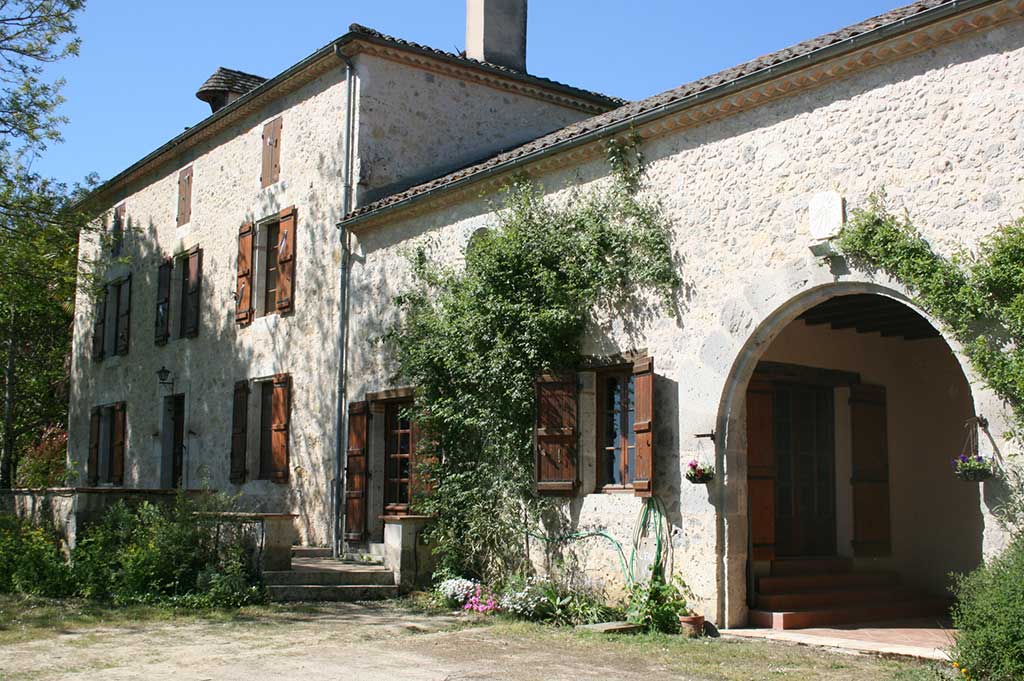
Find out a bit more about our wonderful Grade 2 listed house and its history in Location, and whilst you're here, take a few local walks in the beautiful countryside of the Tean Valley.
|